
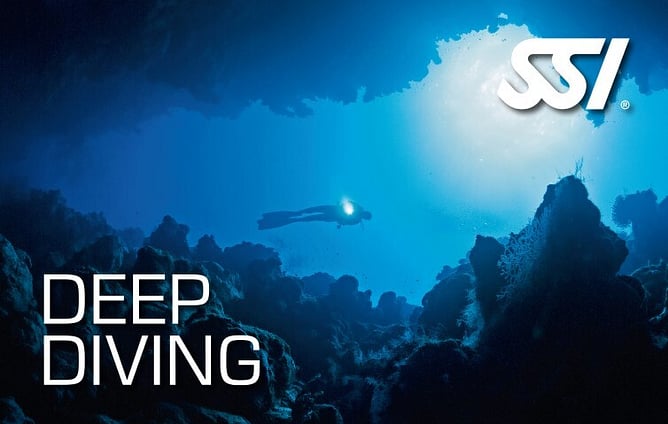
The value of completing an SSI Deep Diver training program
Scuba diving opens a world of wonder beneath the surface — vibrant coral reefs, ancient shipwrecks, and fascinating marine life. But as divers explore deeper waters, the environment becomes more challenging and the risks rise. That’s where the SSI Deep Diver program comes in. Designed to equip divers with the skills, knowledge, and confidence to safely dive to depths of up to 40 meters/130 feet, this specialty course builds on foundational certification and prepares adventurers for deeper, more rewarding underwater experiences.
In this blog post, we’ll dive into the value of the SSI Deep Diver program, the skills and competencies you gain through training, and why deep diver education is essential for anyone who wishes to explore below the recreational diver limits with confidence and competence.
What Is the SSI Deep Diver Program?
The SSI Deep Diver specialty is a structured training course offered by Scuba Schools International (SSI), a globally recognized training agency. It’s intended for certified open water divers who want to expand their capabilities and responsibly explore deeper waters — typically between 18 and 40 meters (60 to 130 feet).
Unlike introductory certifications that introduce you to basic diving skills, the Deep Diver program focuses on the specific considerations that come with increased depth: managing gas consumption, understanding deeper dive planning, buoyancy control in different pressure environments, efficient use of dive tables or dive computers, and recognition and mitigation of depth-related risks such as nitrogen narcosis.
While each SSI dive centre may structure its training schedule slightly differently, the core components of the program remain consistent worldwide.
Who Is the SSI Deep Diver Program For?
The Deep Diver specialty is ideal for:
•Certified Open Water divers with at least 20 logged dives (requirements vary slightly by location)
•Divers who want to expand their diving horizons
•Travelers to destinations famous for deep dive sites such as wrecks, walls, and caverns
•Anyone preparing for advanced technical training
•Divers seeking to boost confidence and safety before venturing into greater depths
The course bridges the gap between recreational diving and technical diving. It doesn’t make you a tech diver — but it equips you with the right tools to dive responsibly at depth.
Why Deep Diving Matters
Deep dive sites are some of the most exhilarating and rewarding places in the ocean:
•Historical wrecks lie deep beneath the surface
•Vertical walls drop sharply into blue infinity
•Unique ecosystems thrive in deeper zones
•Pelagic marine life often frequents deeper waters
However, with greater depth comes greater risk. Air consumption increases, buoyancy changes, no-decompression limits shorten, and divers face the potential for nitrogen narcosis and decompression sickness if they aren’t prepared.
This is precisely why deep diver training matters: it allows divers to push their boundaries safely — building competence, confidence, and awareness so that the deeper world can be enjoyed without avoidable hazards.
The Value of the SSI Deep Diver Program
1. Advanced Understanding of Physics and Physiology
Even experienced divers benefit from structured learning about how the body and equipment behave at depth. During the Deep Diver program, you’ll explore:
•Pressure effects on the body
•Gas density and breathing resistance
•Narcosis and its subtle signs
•Decompression theory
This isn’t abstract classroom theory — it’s knowledge that you apply directly during planning and execution of deep dives.
2. Practical Skills for Deep Diving
The SSI Deep Diver course prioritizes the mastery of practical, real-world skills, including:
•Buoyancy control at deeper depths: Adjusting buoyancy as pressure increases requires finesse and muscle memory. Deep diving reinforces neutral buoyancy skills so divers conserve energy and air.
•Efficient air management: At depth, your breathing rate increases due to gas density. The training emphasizes planning and monitoring air supply so you can execute safe surface margins and emergency reserves.
•Navigation and time management: Deeper dives often involve more complex navigation. You’ll practice using compasses and natural references under different conditions.
•Controlled ascents and extended safety stops: Understanding the physics of decompression and safety stop profundity is vital for minimising the risk of decompression sickness.
3. Enhanced Decision-Making and Risk Assessment
Deep dives don’t just test physical skills — they test judgment. The SSI Deep Diver program teaches divers to:
•Evaluate conditions realistically
•Make conservative dive plans
•Recognize personal limits and adjust accordingly
•Abort or modify dives when necessary
This shift from casual exploration to thoughtful planning represents a significant evolution in a diver’s mindset. It’s what separates novice adventurers from seasoned, responsible deep divers.
4. Broadened Dive Opportunities
With deep diver training under your belt, a world of new dive sites opens up:
•Historic shipwrecks like WWII wrecks or early-era steel hulls
•Sea caves and caverns with deep entrances
•Vertical reef walls with dramatic drop-offs
•Marine animal habitats that rarely occur in shallow water
In many destinations, reaching these remarkable sites safely requires training and confidence that only a deep diver course provides.
5. Strong Foundation for Technical Diving
While the SSI Deep Diver specialty remains within the realm of recreational diving, it is also a stepping stone to Technical Diving paths such as:
•SSI Extended Range
•Gas Blender certifications
•Decompression diving
Technical diving involves planned decompression and specialized gas mixtures like nitrox, trimix, and more. Deep Diver gives you the foundational experience necessary before considering that leap.
Skills and Knowledge You Gain
Let’s explore in detail the key skills and competencies you’ll build during the SSI Deep Diver program.
1. Advanced Buoyancy and Trim
Efficient buoyancy control is essential at any depth, but at deeper levels it becomes even more critical:
•Rapid changes in pressure affect buoyancy more dramatically.
•Mastering neutral buoyancy means conserving air and energy — essential for longer bottom times.
•Proper trim (body position underwater) and improved propulsion techniques to reduce drag and gas consumption.
You’ll practice these skills across multiple dives, learning how minor adjustments improve your overall stability and comfort in the water.
2. Improved Air Consumption and Management
At increased depths, divers use gas faster due to:
•Higher pressure requiring denser gas per breath
•Increased physical effort
•Longer ascent times with safety stops
Training includes planning your gas usage, setting turn-around points, and using dive computers or tables to optimise bottom time while maximising safety margins.
3. Deep Dive Planning and Execution
Dive planning becomes more complex with added depth. You’ll learn:
•How to read and interpret dive tables and computers
•How to set up a dive plan including maximum depth, bottom time, and ascent profile utilising correctly planned run time slates.
•How to incorporate safety stops and contingencies into your dive profile
These skills give you confidence before ever entering the water and guide you through a predictable, enjoyable deep dive experience.
4. Recognizing and Managing Narcosis
Nitrogen narcosis — often described as the “rapture of the deep” — can impair judgment, coordination, and perception. Though its effects vary among individuals, being trained to:
•Recognize early signs of narcosis
•Manage your response
•Adjust depth or abort a dive if needed
…is essential for safety. The Deep Diver program equips you with these recognition and response strategies.
5. Enhanced Emergency Readiness
Being prepared for emergencies is fundamental in all scuba training. In deep diver training, you’ll revisit and reinforce:
•Controlled ascents
•Sharing air with a buddy and/or redundant gas supply
•Emergency ascents from depth
• Delayed Surface Marker buoy deployment and ascent aids
Through supervised practice, these responses become second nature — giving both you and your dive buddy peace of mind.
6. Teamwork and Buddy Dynamics
Deep diving emphasizes teamwork. You’ll learn:
•Effective communication techniques at depth
•Maintaining close buddy proximity
•Expectation setting before dives
•Coordinated emergency responses
These skills not only make dives safer — they make them more enjoyable.
The Deep Diver Training Experience
SSI’s educational philosophy focuses on blending theoretical knowledge with real-world application. Here’s how your Deep Diver experience will unfold:
1. Knowledge Development
You begin with study materials — either digital or print — covering theory on:
•Physics and physiology
•Dive planning
•Gas management
•Safety considerations
•Equipment considerations
You’ll complete knowledge reviews that reinforce important concepts before applying them in the water.
2. Confined Water or Shallow Practice
Depending on local conditions and instructor plans, you might start with controlled environmental practice to:
•Refresh basic skills
•Practice buoyancy drills
•Learn new techniques in a calm environment
This builds confidence before moving to open water dives.
3. Open Water Deep Dives
The heart of the program is conducted in open water — typically four deep dives under the supervision of your SSI instructor. During these dives, you’ll:
•Practice planned descents
•Navigate predetermined tracks and routes
•Execute controlled ascents and extended safety stops
•Refine buoyancy and air management
•Participate in risk assessment discussions
These real dives consolidate your learning and give you true hands-on experience.
4. Mentored Feedback
Throughout your training, the instructor provides constructive feedback:
•What you’re doing well
•Where improvement is needed
•Practical tips for future dives
This personalised coaching accelerates learning and builds confidence underwater.
Deep Diving Isn’t Just a Skill — It’s a Mindset
Deep diving training changes how divers think. It’s not just about going deeper — it’s about understanding limits, planning dives carefully, and approaching each dive with respect for the ocean and your own safety.
Graduates of the SSI Deep Diver program tend to become:
•More cautious planners
•More confident divers
•Better communicators with buddies
•More aware of environmental and physiological factors underwater
This mindset aligns with responsible diving practices — ensuring that each dive is enjoyable, predictable, and safe.
Why Deep Diver Training Is Essential
Some divers attempt deeper dives without formal training, relying on intuition or past experience. But deep diving without proper education can lead to:
•Higher risk of gas management issues
•Unrecognized narcosis symptoms
•Inadequate emergency planning
•Unintended decompression obligations
•Poor buoyancy control leading to accidents
The SSI Deep Diver program mitigates these risks by providing structured learning, supervised practice, and repeatable protocols.
1. Deep Diving Is Not Simply “More of the Same”
As depth increases, conditions change rapidly:
•Pressure effects become stronger
•Air consumption rises exponentially
•Safety margins shrink
•Physiological stresses intensify
Without training, divers can be caught off-guard by these realities. Deep Diver training ensures you understand how to anticipate and manage them.
2. Certification Demonstrates Competency
Many dive operations, charter boats, and resorts require proof of deep dive training before granting access to deep sites. The SSI Deep Diver certification shows you’ve completed structured learning and are prepared to dive deeper responsibly.
3. The Ocean Demands Respect
The underwater world is breathtaking, but it requires respect. Deep diver training instills a deep appreciation for:
•Environmental stewardship
•Dive planning discipline
•Personal limits
•Safe, sustainable exploration
This respect not only protects divers — it protects the underwater environments they love.
Real-World Benefits and Experiences
Graduates of the SSI Deep Diver program often report transformative experiences:
•Confidence to explore beautiful deep walls and wrecks
•Peace of mind knowing how to manage air and time
•Improved skills that enrich all dives, even shallow ones
•A stronger sense of community with dive buddies and teams
•The foundation for advanced certifications and technical diving
For many divers, this course is a gateway to deeper curiosity — whether that leads to underwater photography at depth, wreck exploration, or continued education in technical diving paths.
Conclusion: Beyond the Basics
The SSI Deep Diver program is much more than an add-on certification — it’s an investment in safety, skill, and personal growth as a diver. It equips you with the knowledge and competence to:
•Dive deeper with awareness
•Plan dives responsibly
•Anticipate and mitigate risks
•Manage your body and gear more effectively
•Communicate and work with dive teams more effectively
Whether your goal is to explore breathtaking deep wrecks, swim along dramatic reef walls, or simply become a more confident and capable diver, the SSI Deep Diver specialty provides essential training that elevates your diving to the next level.
Diving deeper doesn’t have to be intimidating — with the right training, it becomes an extension of your underwater adventure.
So, are you ready to take the plunge?
Find out more about the SSI Deep Diving program by CLICKING HERE